
You invested in spectacular solar-control double glazing. You specified a high-performance aluminium profile. And yet, an invisible metal strip, hidden along the edges of your window, is quietly stealing a part of all that efficiency and throwing it outside the house.
The irony of high-end windows is that the weakest link tends to hide in those few millimetres no one notices: the edge where the glass meets the frame. To close that last drain of energy and guarantee absolute comfort, engineering created a definitive solution. It has a name: Warm Edge — the warm edge spacer.
What the spacer is and why it exists
To understand the Warm Edge, we need to look inside an insulated glass unit — the famous double (or triple) glazing.
In an insulated glass unit, the panes of glass do not touch. They are held a rigorously exact distance apart to form a chamber of air or inert gas — the true insulator of the system. The component responsible for holding those panes apart and sealing the perimeter is the spacer.
It is vital. Besides giving the panel its structure, the spacer houses a desiccant material inside it, which soaks up any residual moisture and prevents the glass from fogging up from within. It has to exist. But the material it is made of changes absolutely everything.
The invisible problem of ordinary aluminium
The common industry standard is to make this spacer from aluminium. And this is where the system contradicts itself.
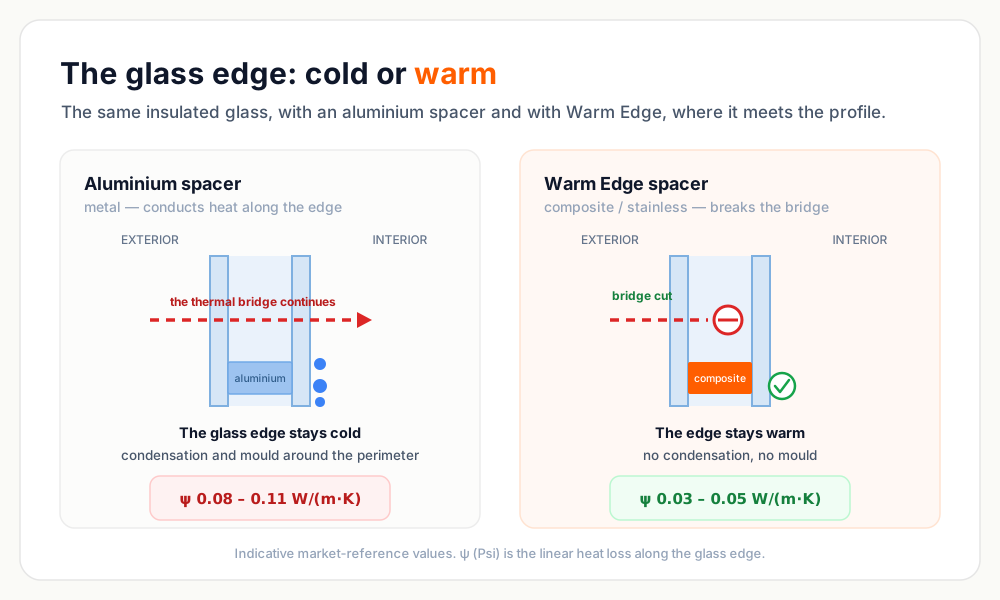
As we showed when detailing the thermal break in the profile, aluminium is an excellent conductor of heat. When we use an aluminium spacer in an insulated glass unit, we create a continuous thermal bridge all around the perimeter of the window. The centre of the glass is blocking the heat, but the metal edge works as an express lane for the exchange of temperature between outside and inside.
In the physics of the Uw value, this phenomenon goes by the Greek letter Psi (ψ) — the linear loss of heat through the edge.
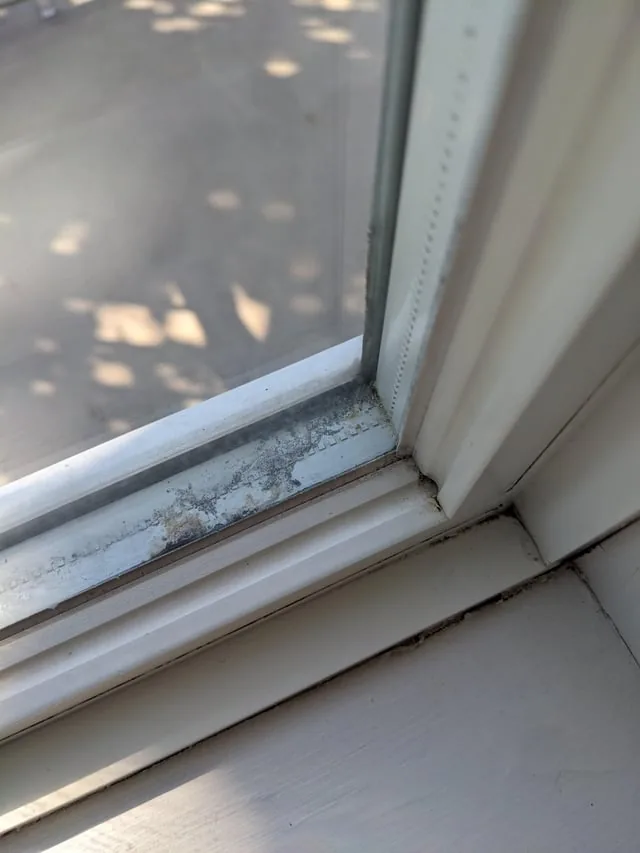
The consequences are not only mathematical; they are visible. On the coldest days of the year, that metal edge turns freezing. If there is moisture in the room's air, it will seek out the coldest surface to settle on. The result is that annoying band of condensation — the "sweat" — that forms around the contour of the glass in the first hours of the morning. Over time, this constant moisture attracts mould and degrades the interior finishes.
What the Warm Edge technology changes
Replace the conductive metal with materials of very low thermal conductivity — thin-wall stainless steel, high-tech thermoplastic polymers or advanced structural composites. That is the Warm Edge.
By removing the aluminium from the boundary of the insulated glass unit, the edge stays, literally, warm. The thermal bridge is cut. The Psi value plummets: whereas an ordinary aluminium spacer sits around ψ 0.08 to 0.11 W/(m·K), a warm edge spacer falls in the range of 0.03 to 0.05 W/(m·K). It may sound like a detail, but this gain at the edge can add about 0.1 W/m²K to the Uw of the whole window — nothing to dismiss when every tenth counts.
And the reward in real life? Truly homogeneous insulation. The edges of the glass stay dry regardless of the weather, eliminating perimeter mould and guaranteeing an invisible, yet real, band of extra comfort next to the window.
Two enemies, the same logic
If you followed our series on thermal insulation, you will notice we are talking about battles on different fronts with exactly the same logic:
- The thermal break interrupts the conduction of heat in the aluminium profile.
- The Warm Edge interrupts the conduction of heat at the edge of the glass.
One does not replace the other. They work together. There is no point in a thermally shielded frame if the edge of the glass next to it is leaking energy. In projects of extreme sustainability, like Passive House buildings — where every tenth of a W/m²K separates approval from rejection of the project —, the warm edge spacer stops being a choice and becomes a technical requirement.
Note that both the thermal break and the Warm Edge fight the heat that crosses the window by conduction. In the Brazilian climate there is still a third front, on the outside of the glass: blocking the sun's radiation before it gets in — the battle of solar control.
The imperceptible detail that changes everything
It is very easy to specify a "double glazing" and think the thermal problem is solved. The ordinary market counts precisely on that inattention to keep pushing aluminium spacers, cutting costs on what the client does not see at first glance.
At Aken Studio, we engineer the exception. The Warm Edge is not a correction; it is our technical foundation. We believe comfort cannot have blind spots. Using warm edge technology in our insulated glass units guarantees what we call perfect continuous insulation: a surface where performance and aesthetics do not conflict.
Next time you analyse the specification of a glass closure, look beyond the thicknesses. Ask about the edge. Now that you have mastered the invisible physics of the thermal profile and the spacer, it is time to see how these technologies come together to make the world's most rigorous housing standard possible — discover the decisive role of windows in the Passive House standard.
Thermal Insulation
- 1The anatomy of comfort: what the Uw value means in the thermal insulation of windows
- 2The metal that gives away your comfort: the engineering behind the Thermal Break in aluminium
- 3The thermal frontier: why the Warm Edge is the detail that changes everything in double glazing
- 4Light without heat: how the solar factor (g) defines the comfort of glass façades
- 5The summit of efficiency: what the Passive House standard is and why the windows decide the game