
Aluminium is a brilliant material. It allows huge spans, minimalist profiles and millimetre-precise structure. But there is a fundamental flaw hidden in its nature: it conducts heat hundreds of times faster than wood or PVC.
Left in its pure state, the aluminium profile becomes an express lane that hands the controlled temperature of your living room straight out to the street. The very property that makes it incredibly strong also turns it into a major thermal leak. Without the right treatment, the frame can quietly ruin the performance of the best glass on the market.
What, in practice, is a thermal break?
To solve this equation, high-end window engineering uses the thermal break. It is not an injected foam or a surface coating. It is a structural intervention at the very core of the frame.
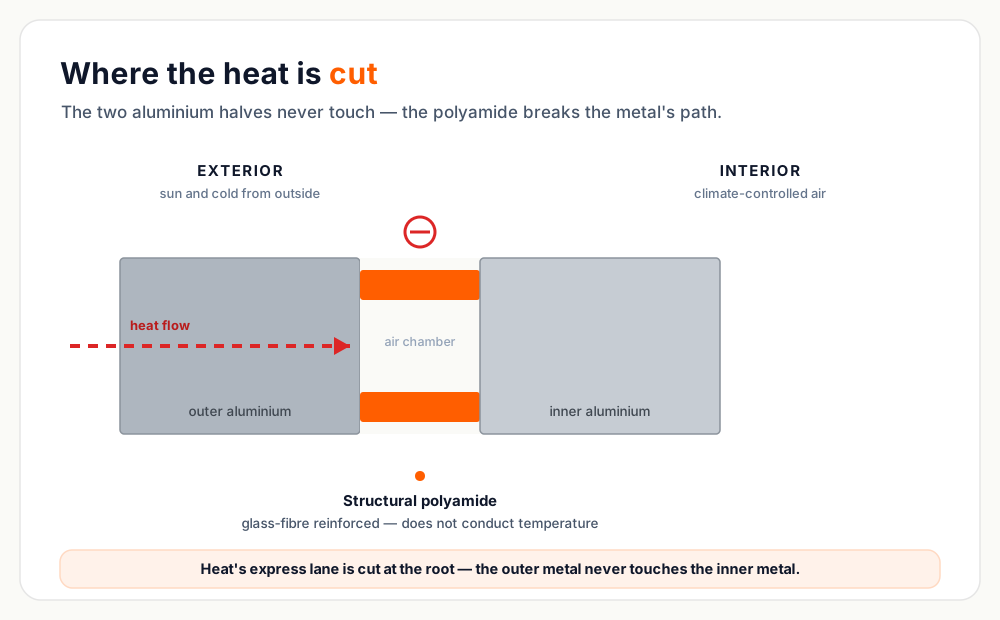
Imagine the aluminium profile of your window cut in half. One half faces the intense heat or cold outside; the other sits inside your room, touching the climate-controlled air. The thermal break is the act of separating those two halves and joining them again with a material that does not conduct temperature.
The express lane for heat is cut off at the root. The metal that faces the weather outside never touches the metal that frames your indoor environment.
How that bond is built
The most efficient and widely used material for forming this barrier is polyamide reinforced with about 25% glass fibre.
The choice of this composite is no accident: polyamide has practically the same coefficient of thermal expansion as aluminium. This ensures that, under the scorching afternoon sun or in the cold of the early hours, the whole assembly expands and contracts identically, without warping the window over the years.
The two aluminium shells are mechanically crimped to the ridges of this polyamide, permanently. It is not glue, not an improvisation. The result is a single solid, structural block, strong enough to carry glass panels weighing hundreds of kilos, yet completely insulated from a thermal point of view.
The first impact: the Uf collapses
In practice, what does the polyamide in the aluminium profile change in your project? The first answer is in the numbers.
As we saw in our guide on the Uw value, the specific insulating capacity of the frame is measured by the indicator Uf — the higher the number, the more the temperature leaks.
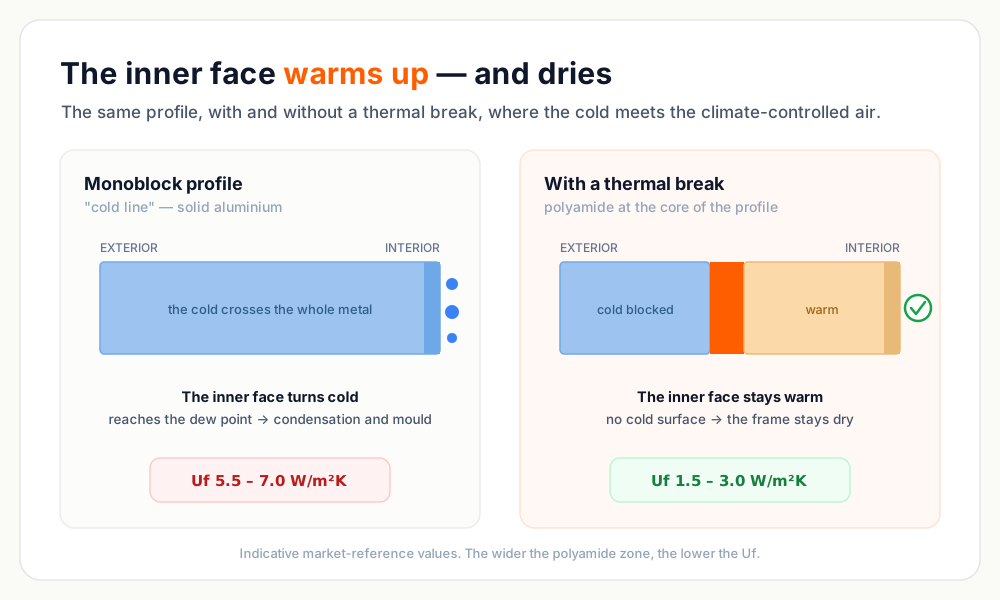
An ordinary aluminium window, also called a monoblock or "cold line" profile, tends to have a dreadful Uf, between 5.5 and 7.0 W/m²K. When we introduce an excellent thermal break system, that number collapses to the range of 1.5 to 3.0 W/m²K. The wider the polyamide zone at the core of the profile, the greater the thermal shielding and the lower the Uf value.
It is this structural efficiency that makes it possible to use aluminium in high-end sustainable projects and in buildings that pursue the Passive House standard.
A caveat is in order: the Uf governs the conduction of heat through the metal. In a hot climate, however, there is a second front — the radiation of the sun directly through the glass — tackled by another technology, solar control.
The second impact: the end of "sweating" windows
The numbers validate the project, but the second advantage is the one you can see and feel. It is the end of condensation.
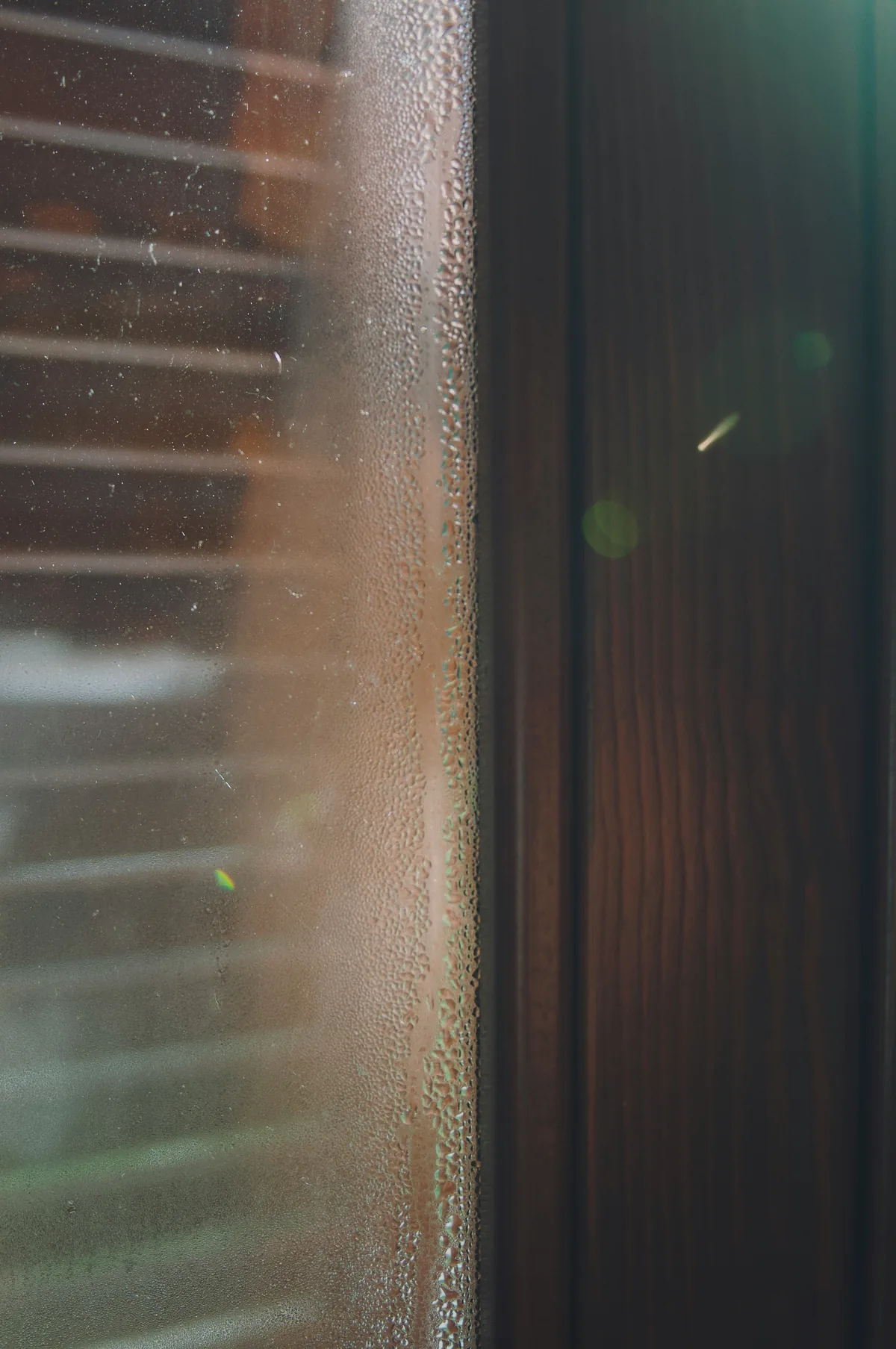
On cold or high-humidity days, with the house climate-controlled inside, the moisture in the air travels until it meets the coldest surface in the room. In the ordinary market, that surface is, invariably, the metal of the frame. On touching the cold aluminium, the moisture reaches the dew point and condenses. The result? Drops running down the profile, puddles of water on the track, ruined skirting boards and the chronic formation of black mould in the corners of the window.
Thermally broken aluminium eliminates this chain of events. Because the polyamide stops the cold from outside crossing the metal, the inner face of the profile stays warm, at room temperature. No cold surface, no dew point. The window of your home stays dry and impeccable all year round.
What to ask when you specify
Telling whether you are looking at a window engineered for real comfort, or at a product with a purely aesthetic focus, is a matter of knowing what to ask.
When comparing systems, do not settle for information about the type of glass. Ask plainly:
- "Does the profile have a thermal break?" If the cross-section is a single, solid piece of aluminium, rule it out. It is a cold profile.
- "What is the width and material of the polyamide?" Very thin barriers, or ones made of simple plastics, deliver neither stability nor real insulation. Glass-fibre-reinforced polyamide is the non-negotiable standard.
The Aken approach: absolute structural insulation
At Aken Studio, insulation is not treated as an accessory for extreme climates, but as the backbone of our engineering. We use structural polyamide barriers, engineered to the millimetre, to cancel aluminium's conductivity. We build windows where the minimalist design on the outside houses a high-tech core within, able to shield the temperature of your environment completely.
The frame, however, is only the first half of the protection. It solves the structural problem of the metal. But the glass carries its own hidden weak point, just a few millimetres from the edge, capable of stealing a part of all that thermal effort.
To understand the other half of this equation and fully master the specification of your façade, discover how we solve this invisible detail in our article on the Warm Edge technology.
Thermal Insulation
- 1The anatomy of comfort: what the Uw value means in the thermal insulation of windows
- 2The metal that gives away your comfort: the engineering behind the Thermal Break in aluminium
- 3The thermal frontier: why the Warm Edge is the detail that changes everything in double glazing
- 4Light without heat: how the solar factor (g) defines the comfort of glass façades
- 5The summit of efficiency: what the Passive House standard is and why the windows decide the game