
You invest in thick walls, premium finishes and state-of-the-art climate-control systems. Yet, structurally, a high-end wall can be 20 to 40 times more insulating than the pane of glass right next to it.
The window is, by nature, the most fragile boundary of any architectural project. It is through the window that the building envelope leaks: summer heat invades, the cool air from the AC escapes, surfaces turn cold, invisible draughts appear and, of course, energy efficiency collapses.
To solve the problem of thermal insulation in windows, the market tends to offer simplistic answers, like "buy this glass" or "use this thickness". But the thermal performance of a window is not an off-the-shelf product; it is a system. And to read the real quality of that system and protect your thermal comfort, you only need to understand one metric: the Uw value.
What "insulation" really means: decoding the U-value
In engineering jargon, a window's ability to retain temperature is called thermal transmittance, measured by the U-value. The unit (W/m²K) may sound complex, but the concept is very straightforward: it calculates how much heat flows through one square metre of material for each degree of temperature difference between the inside and the outside.
Think of the U-value as your window's rate of temperature "leakage". The one rule you need to memorise is this: the lower the U-value, the better the insulation. A high number means your home's energy is escaping; a low number means it is protected.
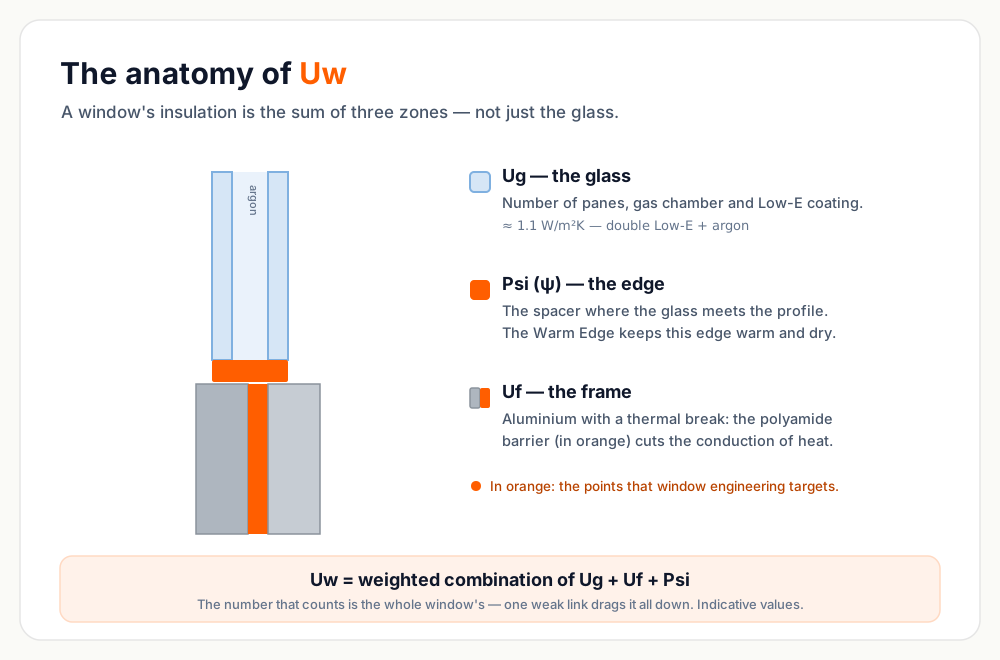
The Uw value is not one thing. It's three.
The most common mistake when specifying a window for energy efficiency is to look only at the glass. But the thermal transmittance of a whole window — called Uw (where "w" stands for window) — is the weighted average of three elements working together. If one of them fails, the entire system collapses.
1. Ug: The glass
The "g" stands for glazing. It is the factor that measures the insulation of the glazed surface alone. It is determined by the build: whether the glass is single, double or triple, whether the space between the panes is filled with argon gas instead of ordinary air, and whether it has low-emissivity (Low-E) coatings.
And why argon? This noble gas is denser and "lazier" than ordinary air. By filling the cavity of the insulated glass unit, it slows the convection currents that would carry heat from one pane to the next — which lowers the Ug even further, without changing the transparency of the glass in the slightest. It is a silent, invisible and cheap gain, and that is why it became standard in any high-performance double glazing.
2. Uf: The aluminium profile
The "f" stands for frame. It is the insulating capacity of the frame. Aluminium is a structurally perfect material, but a terrible insulator. Left bare, the profile becomes an express lane for heat exchange. This is where thermal break technology comes in — a polyamide barrier at the core of the aluminium that drastically lowers the Uf value.
3. Psi (ψ): The warm edge
The linear thermal bridge. This is the detail almost everyone forgets. It is the exact perimeter where the glass meets the aluminium profile. In ordinary windows, a metal spacer conducts heat all the way around that edge. The solution that cancels this loss goes by the name of Warm Edge, a composite-material spacer that breaks this thermal bridge.
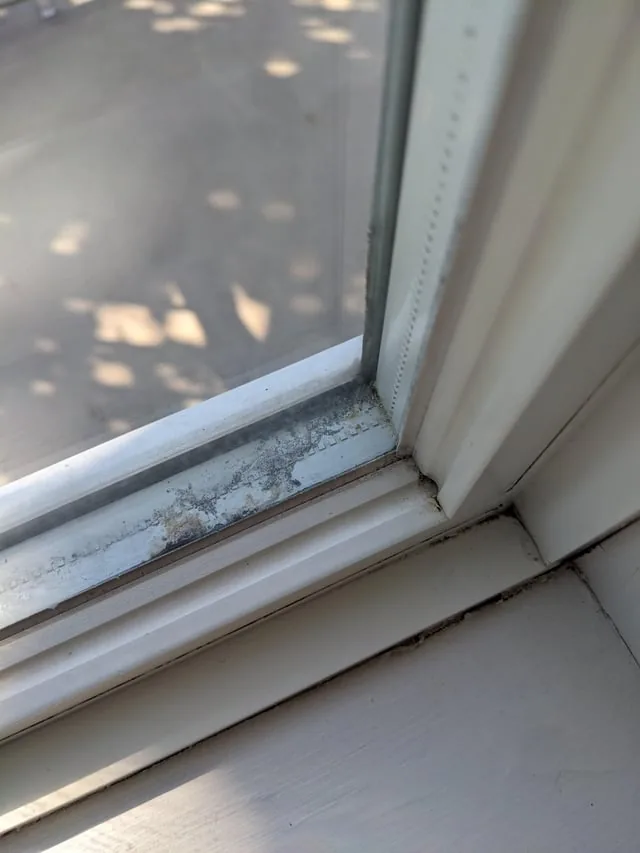
A high-end window has no room for weak links. Putting the best double glazing (a great Ug) into a cold, uninsulated profile (a terrible Uf) with an ordinary spacer (a high Psi) results in a mediocre Uw. The number that condemns or absolves your window is the total Uw.
Reading the scale: what counts as an acceptable number?
So that you do not have to trust the sales pitch alone, it helps to have a mental map of where the industry stands. Consider the following reference scale (indicative values):
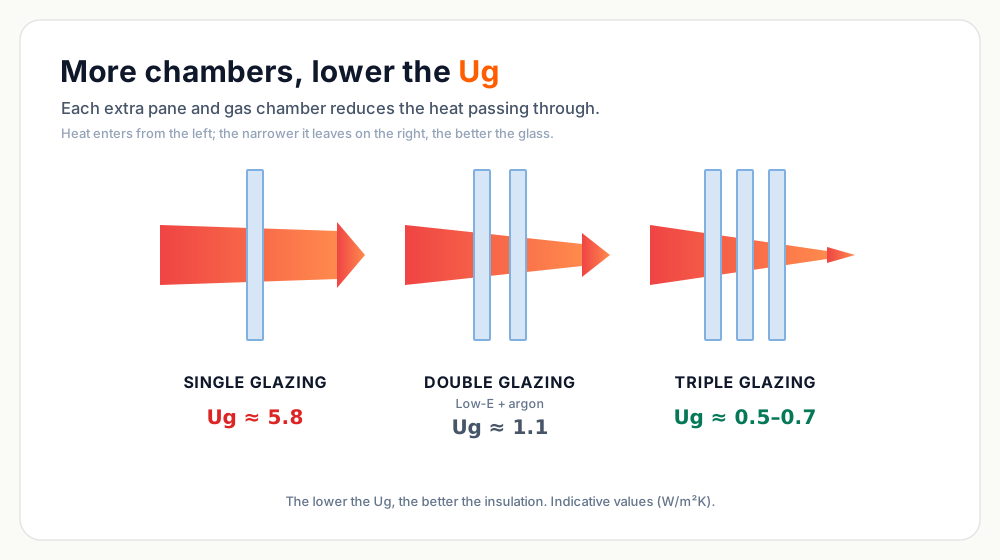
- Ordinary single glazing: Ug around 5.8. (Practically a thermal hole in the wall.)
- Standard double glazing: Ug drops to about 2.7.
- Double glazing with Low-E and argon: Ug reaches close to 1.1.
- High-performance triple glazing: Ug between 0.5 and 0.7.
Combine the three (Ug, Uf and Psi) to find the Uw (the whole window), and a high-performance window typically lands between 0.8 and 1.3 W/m²K.
To put that in perspective, the world's most demanding building standard for comfort and efficiency — Passive House — requires windows to deliver a Uw ≤ 0.80 W/m²K. The point is not for you to memorise these numbers, but to tell a marketing promise apart from a genuinely efficient product.
Beyond the lab: the real-life impact
Numbers mean nothing if you cannot feel them. So what does a low Uw value deliver in your day-to-day life?
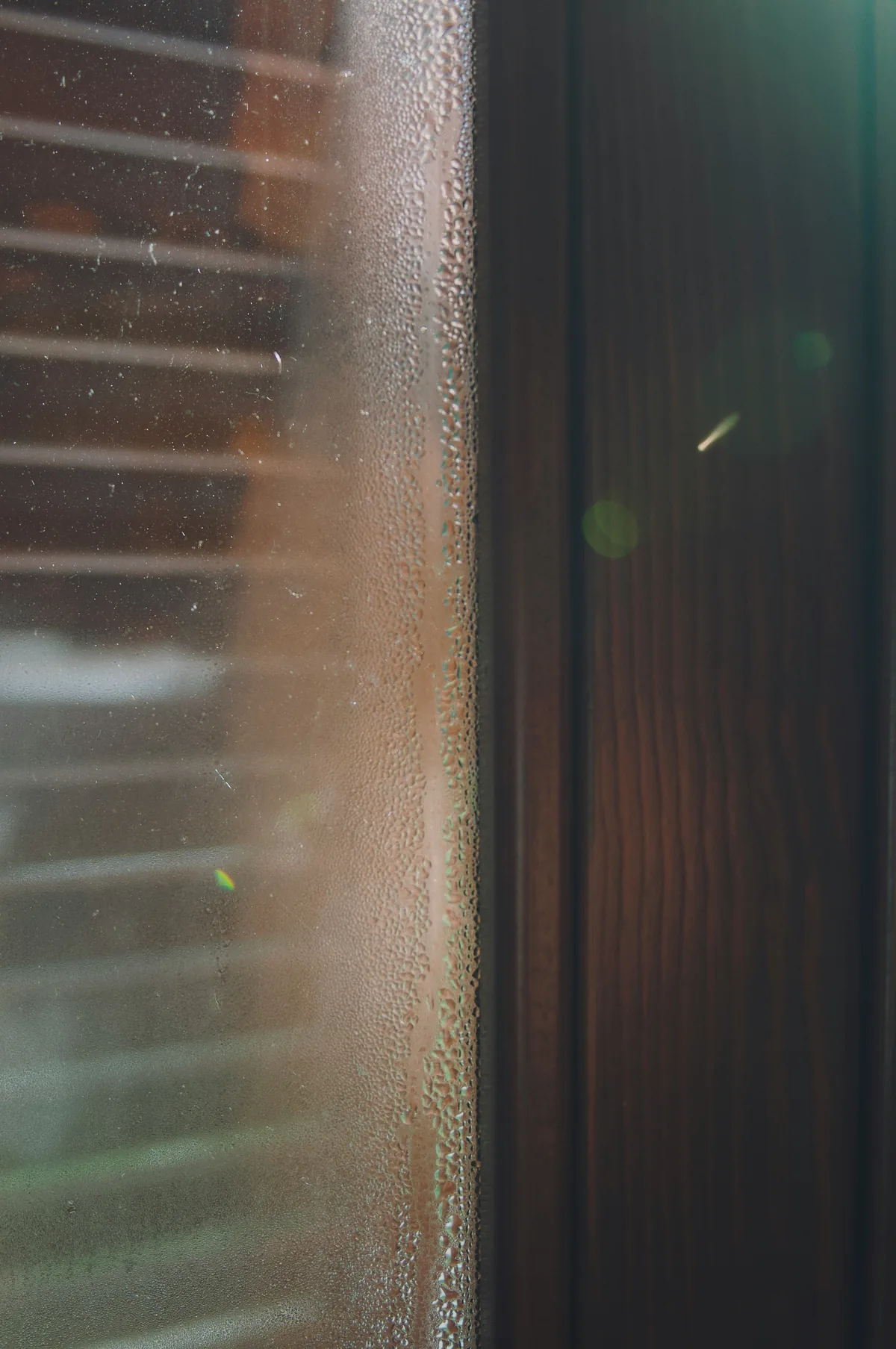
First, the end of cold surfaces and radiated heat. You can sit next to a large glass panel on the hottest afternoon of the year and not feel the sun cooking the room through it. Second, the end of the "sweating" window. When the inner part of the profile and the edge of the glass keep a stable temperature, the moisture in the air does not condense there. That pool of water on the track and the black mould along the edges simply do not form.
The result is a millimetre-stable indoor temperature. Comfort becomes the product; the Uw value is merely the mathematical proof that it exists.
A note on the other half: the Solar Factor (g)
It is worth a brief aside. Insulation (the U-value) is about blocking the flow of heat transferred by conduction and convection. But, especially in the Brazilian climate, there is another crucial variable: the direct radiation of the sun passing through the glass.
This is measured by the solar factor (or g-value). In a country of strong sun, and on façades that catch the afternoon sun, the perfect window has to master both worlds: a low Uw value (so the cool air from the AC does not escape) and intelligent solar control (so the light comes in, but the sun's heat stays out).
That is a story all of its own — and we tell it in full in our guide on the solar factor and solar control, the other half of the physics that defines the comfort of a glass façade.
Insulation as an integrated system
At Aken, we know that a monumental façade demands engineering to match — and that empty sophistication does not survive the sun that beats down on the façade on summer afternoons, nor the chill of a winter night in the South. We design our windows on the premise that thermal and acoustic insulation must be pushed to the limit of engineering.
We do not treat Ug, Uf and Psi as optional items. The aluminium profile with a structural thermal break, the high-performance insulated glass and the Warm Edge spacer operate as one ecosystem. The result is a real Uw, uncompromising. Not just good glass masking a deficient profile, but perfect continuous insulation.
Now you know how to read the true quality of a window. To understand what really happens inside the two most critical points of thermal leakage in the system, we invite you to dive into the internal design of the profiles in our article on the Thermal Break and into the invisible detail of the Warm Edge spacer.
Thermal Insulation
- 1The anatomy of comfort: what the Uw value means in the thermal insulation of windows
- 2The metal that gives away your comfort: the engineering behind the Thermal Break in aluminium
- 3The thermal frontier: why the Warm Edge is the detail that changes everything in double glazing
- 4Light without heat: how the solar factor (g) defines the comfort of glass façades
- 5The summit of efficiency: what the Passive House standard is and why the windows decide the game